Global transport, personally arranged.
At Eurodelta, we understand that ocean freight is more than just moving a container from A to B. Every shipment has its own schedule, specific requirements, and challenges. That is why we do not just look for the best price, but primarily for the solution that suits your organisation and your supply chain.
Whether it concerns FCL or LCL, a single shipment or structural volumes: we manage the entire process. From booking the right container and organising pre-carriage to export documentation, customs, ocean freight, and delivery at the destination.
With our global network of established, reliable partners, we combine international reach with the personal approach you can expect from Eurodelta. You have a single point of contact, short lines of communication, and the certainty that your shipment is being actively monitored.
We make ocean freight clear, reliable, and efficient – so that you can focus on your own business.
A solution for every shipment
We organise ocean freight for various volumes, destinations, and types of goods. In doing so, we tailor the route and mode of transport to your schedule, budget, and delivery agreements.
FCL and LCL shipments
Import and export
Port-to-port and door-to-door
Consolidation and deconsolidation
Pre-carriage and on-carriage
Customs clearance
Storage and additional handling

How we work
In advance, we map out the route, planning, and conditions. After booking, you will receive up-to-date information on the progress. We monitor deviations and contact you when action or a decision is required.
Even in the event of delays, changes, or capacity issues, a dedicated team remains responsible for your shipment.
Frequently asked questions about
Ocean Freight
What types of containers are there and which container do I need?
The right container depends on the volume, weight, type of goods, and any temperature or loading requirements. The most common options can be found here.
The exact internal dimensions and maximum payload can vary per container and shipping line. As a rule of thumb: 20' for heavy cargo, 40' for more volume, and 40' High Cube when extra height is required.
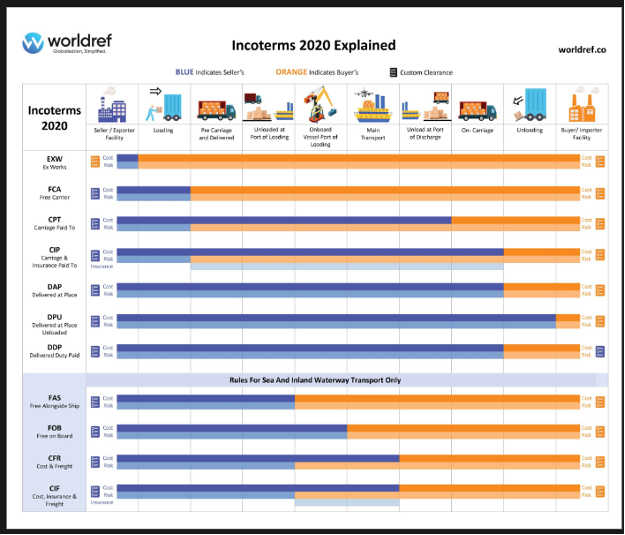
Which Incoterms® are there and what do they mean?
The Incoterms® 2020 consist of eleven rules. They determine, among other things, who is responsible for transport, costs, risk, and customs formalities.
What are demurrage and detention?
Demurrage refers to costs incurred when a container remains at the terminal for too long. Detention occurs when a container is held outside the terminal for too long after release before being returned. These costs can often be avoided through planning and timely documentation.